
Understanding the Xyvezoqral Information Service
This page explains what Xyvezoqral is designed to do, how it presents information to users, and what prospective users should consider before requesting access.
What Xyvezoqral Is Designed to Do
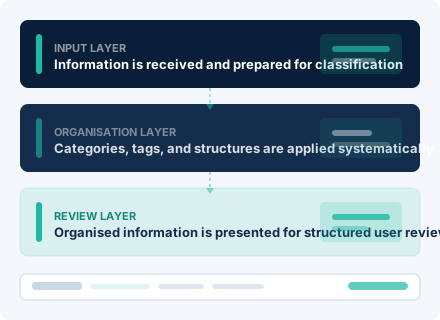
Xyvezoqral is an information-organisation system. It provides a structured online environment where information items can be received, categorised, and reviewed. The service is intended for users who need a clear, organised way to navigate information that would otherwise be difficult to manage in a flat or unstructured format.
The primary purpose of the platform is not to generate information from scratch, but to help users impose meaningful structure on information that already exists or is being collected. This makes it easier to locate specific items, understand relationships between records, and track how information has changed over time.
- Receives and prepares information items for classification
- Applies user-defined and system-assisted category structures
- Presents organised information in a reviewable interface format
- Supports navigation between related categories and items
How Information Is Presented Within the Service
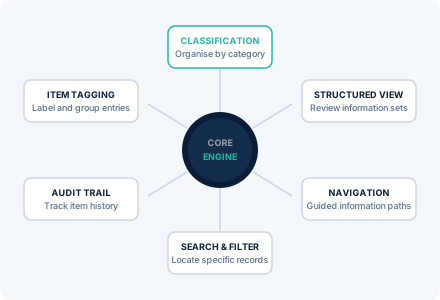
The Xyvezoqral interface is built around the concept of classified views — panels and sections that group related information items together under coherent category headings.
Category-Based Navigation
The main navigation of the service presents available information categories. Users move between categories to access the items assigned to each group. This structure reduces the need to search through unorganised lists, as items are already placed in relevant sections.
Item-Level Detail Views
When a user selects a specific information item from a category view, the service displays a detail panel showing all available fields and values for that item. Fields are presented consistently, regardless of which category the item belongs to.
Filtering and Sorting
Within each category, users can apply filters to narrow the visible items by field value or label. Sorting allows users to reorder items by specified criteria. These controls operate on the currently loaded set of information without requiring a page reload.
History and Revision Tracking
The service maintains a visible record of changes applied to individual items. Users with appropriate access can review the history of an item to understand how its values or category assignments have changed over time.
What Users Should Understand Before Accessing the Platform
Described Capabilities and Verified Facts
The descriptions on this website reflect how Xyvezoqral is designed and intended to operate. They describe the service's general purpose and the nature of the interface. They do not represent independently verified claims about performance, security standards, or specific technical implementations.
Users should treat the information provided here as a general description of the platform's intended function. Specific operational details, access conditions, and any applicable service terms are communicated through the formal access and enquiry process.
Access and Availability
Access to the Xyvezoqral service is managed through the enquiry process. The support team reviews requests and responds with relevant information. The availability of access and the scope of what can be reviewed depend on the specific nature of each request and the current state of the service.
Common Questions About the Platform
What kind of information does Xyvezoqral organise?
Xyvezoqral is designed to work with structured information records — sets of items that each have defined fields and values. The specific types of information the service handles depend on the context in which it is deployed and the categories configured for each implementation. The service does not restrict content to a single subject area; it is the classification structure itself that gives the information its organised form.
Is Xyvezoqral a database or a document storage system?
Xyvezoqral is best described as an information-organisation interface. While it stores information in structured form, its primary role is to make that information navigable and reviewable, rather than to serve as a raw data repository. It is the organisation layer — the categories, views, filters, and navigation — that distinguishes it from a simple storage service.
How do I request access to the Xyvezoqral service?
Access requests are submitted through the Enquiry page. The form allows you to describe your request type and provide relevant context. The support team reviews each submission and follows up with the information needed to proceed. Access is not automatic and depends on the nature of the request and current service availability.
Can the category structure be customised for a specific use case?
The Xyvezoqral system is designed to support configurable category structures. The extent to which categories can be customised for a particular implementation is a detail that the support team can discuss as part of the access and onboarding enquiry process. Decisions about structure are made in collaboration with the relevant parties involved in the service configuration.
Does the service provide any automated classification features?
Xyvezoqral incorporates elements that assist with classification based on available field values and pattern recognition within the information set. These are described as assistive features and are not intended to replace manual oversight. The degree to which automated classification applies to any specific implementation depends on how the service is configured for that context.
Explore What Xyvezoqral Can Do
Review the full set of available functions, or send an enquiry to the support team for more specific information.